
A good workout recovery routine has a funny way of making you feel unstoppable — right up until the next morning.
Your legs are heavy, your shoulders feel tighter than they did yesterday, and suddenly the stairs require more thought than they should. That’s usually when recovery gets your attention.
The fitness world has plenty of answers. Stretch more. Buy a massage gun. Take an ice bath. Track your sleep. Add supplements. Foam roll before bed. Before long, recovering from a workout can sound like another workout in itself.
It doesn’t have to be.
For most active people, a useful recovery routine is less about doing everything and more about knowing what matters, when you need it, and what you’re realistically going to keep doing three months from now.
Most Days, Keep It Simple
Not every training session deserves the full recovery treatment.
After a normal gym session or an easy run, the basics will usually do most of the work. Eat a proper meal. Replace the fluids you’ve lost. Give yourself enough time to sleep. If something feels tight, spend a few minutes moving rather than turning it into a 45-minute stretching session.
Simple doesn’t mean ineffective.
In fact, recovery often starts to fall apart when we make it too ambitious. It’s easy to follow an elaborate routine when motivation is high. It’s much harder on a Wednesday evening when work ran late, dinner still needs to be made and tomorrow’s alarm is already set.
There’s also value in knowing when to ease off.
If you’ve had several hard sessions in a row and your usual pace suddenly feels difficult, another all-out workout may not be the answer. Sometimes an easier session — or a day away from structured training altogether — is exactly what keeps the rest of the week on track.
The goal isn’t to feel completely fresh every morning. Training is supposed to challenge you. The goal is to manage that fatigue well enough that it doesn’t quietly take over.
Hard Sessions Are Where the Extras Make More Sense
Of course, some workouts hit differently.
A long run, heavy lower-body session, hard interval workout or weekend competition can leave more behind than an ordinary training day. That’s when people often reach for extra recovery methods.
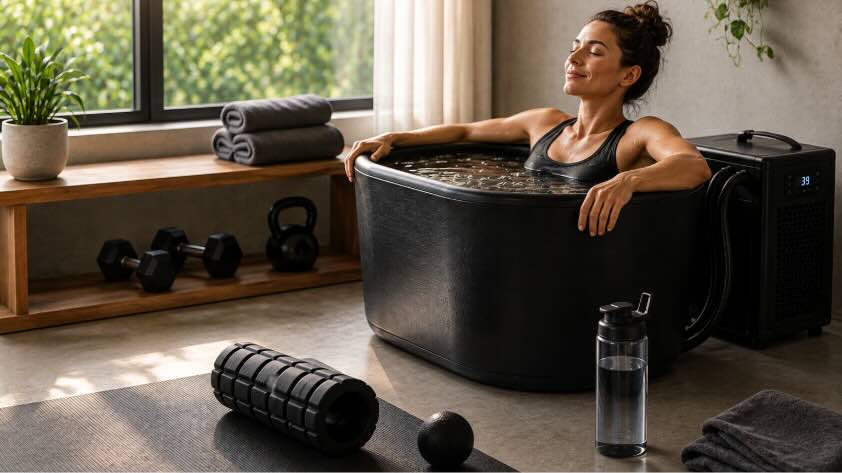
Maybe it’s ten minutes with a foam roller. Maybe you prefer some gentle mobility work or a massage. For others, cold-water immersion has become part of the routine after particularly demanding sessions.
The interesting part isn’t necessarily which method you choose. It’s whether using it regularly fits into your life.
Take an ice bath. Doing one occasionally is fairly straightforward: fill the tub, buy some ice and get the temperature down. Repeat that several times a week, however, and the preparation becomes part of the commitment. You finish training, but there’s still ice to buy, carry and pour.
For someone who already uses cold-water immersion regularly, a 1hp cold plunge chiller can remove that repeated ice run and make a dedicated setup easier to keep ready. That’s also where brands such as Plunge Chill fit into the wider recovery space — not by replacing the fundamentals, but by making one particular routine more convenient for people who already use it.
That distinction matters.
A recovery tool should solve a problem. It shouldn’t give you another obligation.
If you don’t enjoy cold plunging, you don’t need to force it into your week. The same goes for massage guns, foam rollers and almost every other recovery trend. What works on someone else’s Instagram feed doesn’t automatically belong in your training plan.
The Best Routine Is Usually the One With Less Friction
There’s a reason some good intentions disappear after two weeks.
They’re inconvenient.
Imagine getting home after a late workout. You’re hungry, tired and would quite like to sit down. If your recovery plan now requires an hour of preparation and six separate steps, how often are you really going to follow it?
This is where small changes become surprisingly useful.
Keep your water bottle somewhere visible. Have two or three post-workout meals that don’t require much thought. If you regularly use a resistance band or foam roller, don’t bury it at the back of a cupboard. Make the things you want to do easy to start.
It sounds almost too obvious, but convenience is often what separates a routine from a short-lived experiment.
The same principle applies to rest.
You don’t have to “earn” a recovery day by reaching complete exhaustion first. If your sleep has been poor, your performance is slipping and your body feels unusually beaten up, adjusting the week’s plan isn’t laziness. It’s part of managing training.
That flexibility is what allows a routine to survive busy weeks, travel, work deadlines and all the other things that don’t care about your gym schedule.
Stop Trying to Recover the Same Way Every Day
Your Monday recovery doesn’t have to look like your Saturday recovery.
That’s probably a good thing.
After an ordinary session, dinner and sleep may be enough. After your hardest workout of the week, you might spend more time on mobility or another recovery method you know works well for you. After several demanding days, an easy walk or complete rest might make more sense than adding another training session.
Think of recovery as a menu rather than a checklist.
You choose according to what you’ve actually done and how you’re responding to it.
Over time, those patterns become easier to recognize. You might notice that heavy leg training leaves you stiff for two days, while a long bike ride doesn’t. Maybe late workouts interfere with your sleep. Perhaps you discover that one recovery method everyone talks about doesn’t seem to do much for you.
That’s useful information, not failure.
A sustainable routine leaves enough room to learn what your body responds to instead of forcing every popular technique into the same week.
Train, Recover, and Come Back
The best recovery routine probably won’t look particularly impressive.
Most of it happens quietly: a decent meal after training, enough water during the day, a good night’s sleep and the occasional decision not to push quite as hard.
Extra tools can have a place too. Mobility work, massage, foam rolling or cold water may be useful when they match your training and preferences. They just don’t need to become the center of the routine.
Because recovery isn’t really about collecting methods.
It’s about being ready to come back.
Build a routine that works on your busiest week, not just your most motivated one. Keep the basics consistent, use the extras when they make sense, and remove the little inconveniences that make good habits harder than they need to be.
Then train again.


