
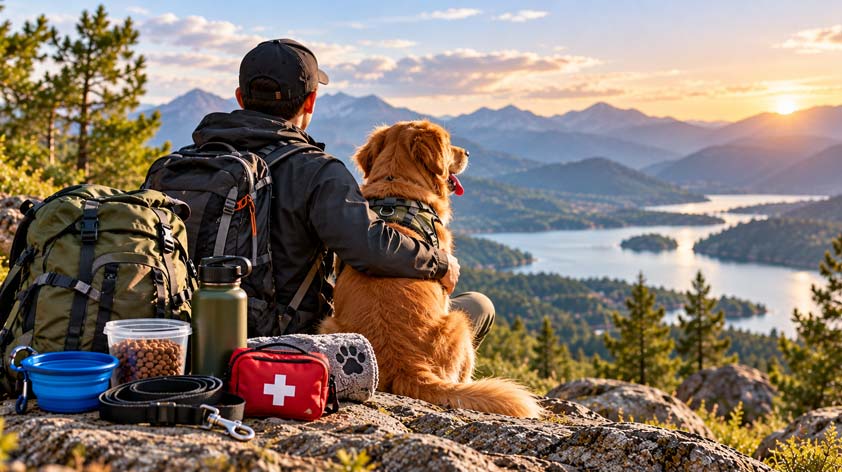
Taking a dog on a proper outdoor adventure sounds pretty straightforward. Leash. Water. Dog. Done. Except it rarely works that simply. A longer walk can turn into a hike. The weather can get warmer than expected. Your dog can find a muddy patch within about five minutes. And somehow, the one thing that was forgotten is usually the thing that’s needed most. That’s why having a dog hiking checklist before heading out can make a longer day outside easier and more enjoyable for both the dog and the person holding the leash.
So before heading out, it helps to have a basic checklist. Nothing excessive. Just the stuff that makes a longer day outside easier for both the dog and the person holding the leash.
Start With the Right Gear
Start with the harness and leash. A decent harness that fits properly is much more useful on a rough trail than a loose collar. There’s also better control if the dog suddenly decides to investigate something on the other side of the path.
A collapsible water bowl is worth throwing into the bag too. They are small when folded, and there’s no reason to carry a full-sized bowl around all day.
Then there’s the safety pack. First-aid supplies, for example. A few gauze pads, antiseptic wipes, something for removing ticks and some basic pet-safe supplies can be useful if a paw gets scraped or something gets stuck in the fur.
Paw balm can help when the ground is dry or rough. Booties can also protect paws from hot surfaces, sharp rocks or ice. But don’t put them on for the first time halfway through a long hike. Some dogs absolutely hate them.
And then there’s the dog backpack. It can be useful for carrying lightweight things such as waste bags or a bowl, but it shouldn’t become a mini hiking pack. Dogs don’t need to carry heavy loads just because they technically can.
The National Park Service recommends carrying extra food and water, checking trail rules before setting off and keeping dogs away from wildlife.
Water Is Part of the Gear
This one is easy to get wrong. A dog running around outside can drink a lot more than expected, especially in warm weather. And because dogs rely heavily on panting to cool themselves, heat can become a problem surprisingly quickly.
There isn’t one exact amount of water that every dog needs. A small dog going for an hour in cool weather is obviously different from a large dog hiking for half a day in warm conditions. The simple rule is to take more than seems necessary. If the walk is supposed to take two hours, don’t pack exactly two hours’ worth of water and hope everything goes according to plan. Trails take longer. Dogs stop. People stop. Someone gets distracted by a very interesting smell for ten minutes. It happens. Also, don’t assume a stream or pond is safe just because it looks clean. Water in the wild can carry bacteria, parasites and other contaminants. Fresh water brought from home is the safer option.
What About Food?
This depends quite a bit on the dog and what the day actually looks like. A dog that spends three or four hours running around on trails is obviously burning more energy than one spending most of the day sleeping on the sofa. That doesn’t mean the food needs to change overnight. In fact, changing food right before a hike is probably one of the worst times to experiment. A new food that doesn’t agree with the dog can turn a nice outdoor day into a very unpleasant one.
For regular hikes or long walks, familiar food is usually the easier choice. Look at the calorie content, protein, fat and overall nutritional profile. But don’t get caught up in the idea that more calories automatically mean better food. The right amount depends on the dog’s size, age, condition and usual activity.
Pack measured portions in something sealed and easy to carry. A few familiar treats can be useful too, particularly if the dog needs encouragement during training or longer sections of a trail. For anyone comparing everyday food options, dry dog food suppliers can provide information on ingredients and different formulations. The useful part is finding something appropriate for the individual dog, rather than simply choosing whichever product makes the biggest nutrition claim.
A Few Things That Somehow Always Get Forgotten
Waste bags. Definitely pack those. An ID tag with current contact details is also important. And it’s worth checking the microchip information before heading somewhere unfamiliar. Having a microchip doesn’t help much if the contact details attached to it are years out of date.
For dogs that regularly go hiking, a GPS tracker can be another useful option. Especially if the dog is the type that sees a rabbit and suddenly forgets every command ever learned.
Then there’s the towel. A small dog towel takes almost no room in the car and can save the seats after rain, mud or an unexpected swim. A blanket is useful too. It gives the dog somewhere dry to sit during breaks and can make the journey home much less messy.
Watch the Dog, Not Just the Distance
A route being labelled “easy” doesn’t necessarily mean it will be easy for every dog. A dog that normally walks for 30 minutes may not be ready for a three-hour hike. Fitness takes time to build. Pay attention to what the dog is actually doing. Heavy panting that doesn’t settle, excessive drooling, weakness, stumbling, vomiting or suddenly refusing to walk are all reasons to stop rather than keep going. Don’t try to finish the trail just because it is on the plan. Move somewhere cooler, give the dog water and allow time to recover. If the symptoms are severe or don’t improve, veterinary help may be needed.
Weather matters too. A route that feels perfectly manageable on a cool morning can be a completely different experience in strong heat or high humidity. Starting earlier can make a huge difference.
Keep It Simple
The checklist doesn’t need to be complicated. Harness. Leash. Water. Bowl. Food. Treats. First aid. ID. Waste bags. Towel. That’s a pretty good starting point. The main thing is matching the outing to the dog. Not every dog needs a huge hike, and not every dog enjoys being pushed further just because the route is there. Sometimes a shorter trail, a few water breaks and plenty of time to sniff around is the better day. And honestly, that’s still a good workout. The dog gets movement and stimulation. The person gets some fresh air and exercise. Nobody has to carry twenty kilos of unnecessary gear into the woods. That’s probably the better version of an active dog adventure anyway.


