Weighted vests are no longer just simple training tools—they’ve evolved into engineered fitness systems where material choice directly affects comfort, performance, safety, and durability. This Weighted Vest Materials Comparison explores the most common fill technologies used today, including iron sand, silicone-iron composites, and solid iron blocks. Understanding the differences helps you choose a vest that matches your training style, whether it’s walking, calisthenics, running, or strength conditioning.
Understanding the differences helps you choose a vest that matches your training style, whether it’s walking, calisthenics, running, or strength conditioning.
Iron Sand Weighted Vests
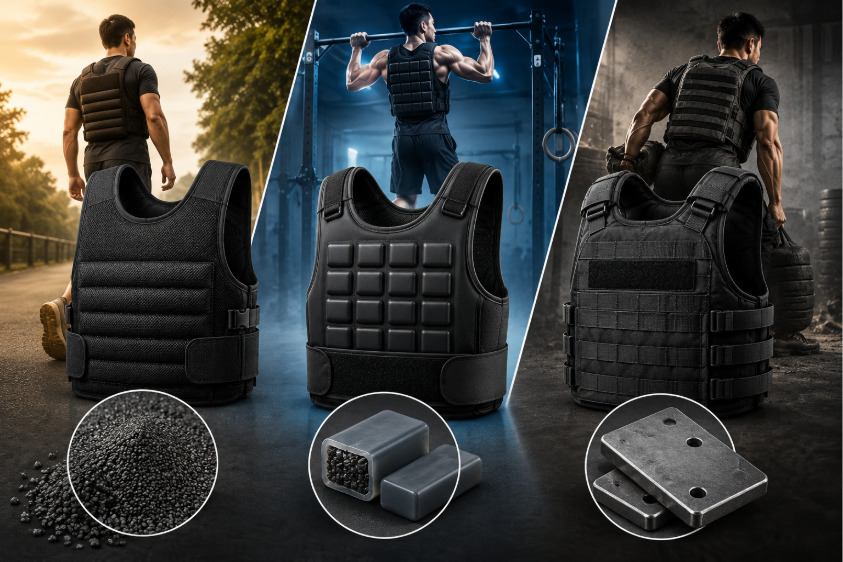
Iron sand is one of the most widely used fill materials in entry-level and mid-range weighted vests. It consists of fine iron particles encased in fabric compartments or small sealed packets.
Iron sand distributes weight by filling multiple stitched chambers across the vest. Instead of a single rigid load, the particles shift slightly with movement, creating a semi-dynamic feel. This gives the vest a more “natural” wearing experience during walking or light jogging.
Advantages of Iron Sand
Iron sand remains popular for several reasons:
- Affordable manufacturing cost makes it accessible for beginners.
- Flexible weight distribution adapts easily to body movement.
- Soft impact feel compared to rigid metal systems.
- Quiet operation with no clanking during normal use.
For general fitness users doing daily walks, home workouts, or light cardio, iron sand provides a comfortable entry point.
Limitations of Iron Sand
However, it has clear drawbacks:
- Weight shifting over time can reduce overall stability.
- Less precise load distribution compared to engineered systems.
- Potential leakage risk if the fabric stitching weakens.
- Bulkier profile when heavier loads are required.
Bottom Line: Iron sand vests are best for casual training, not high-performance or explosive movements.
Silicone-Iron Weight Vests
Silicone-iron systems represent a newer generation of weighted vest technology. Instead of loose particles, iron is embedded or coated within a silicone-based matrix, forming structured, semi-solid weight units. This is often associated with premium fitness systems designed for comfort and durability.
Each weight segment is a sealed composite block, where iron particles are suspended in flexible silicone. This creates a controlled density that behaves like a hybrid between soft fill and a solid plate. The result is a vest that moves seamlessly with the body while maintaining its structural integrity.
Advantages of Silicone-Iron
Silicone-iron designs are increasingly popular among performance-focused users:
- Stable weight distribution with minimal shifting or bouncing.
- Shock absorption reduces impact stress on joints.
- High durability against leakage, sweat, and environmental wear.
- Balanced flexibility that hugs the torso.
These vests often feel more “premium” because they eliminate the loose, granular movement found in iron sand systems.
Limitations of Silicone-Iron
Despite their advantages, they are not perfect:
- Higher cost due to manufacturing complexity.
- Slightly less rigid than pure iron plates for maximal load training.
- Heavier feel at higher densities compared to sand systems.
Bottom Line: They are ideal for users who want a long-lasting, mid-to-high performance vest without stepping into full military-style plate systems.
Solid Iron Block Weighted Vests
Solid iron block systems represent the most rigid and performance-oriented category. In any Weighted Vest Materials Comparison, these vests stand out for using machined or molded iron plates inserted into fixed, heavy-duty pockets. They are commonly found in strength training, tactical fitness, and high-intensity functional workouts.
Instead of distributed fill, solid iron plates create defined weight segments that sit tightly against the torso. This minimizes movement and maximizes load stability. The structure is highly similar to a tactical plate carrier.
Advantages of Solid Iron Blocks
Solid iron systems excel in high-intensity performance environments:
- Maximum stability with zero internal shifting.
- Indestructible and highly durable materials.
- Compact design allows higher weight in a smaller total volume.
- Ideal for progressive overload in calisthenics, rucking, and strength training.
This is the preferred system for athletes focused on measurable, unyielding resistance.
Limitations of Solid Iron Blocks
However, the trade-offs are significant:
- Reduced comfort for long-duration wear.
- Higher impact stress during high-impact running or jumping.
- Less forgiving on joints for beginners.
- Heavier, “hard” feel against the body.
Bottom Line: Solid iron vests are not ideal for casual walking or extended cardio unless the user is already well-conditioned.
Side-by-Side Comparison of Materials
Each material serves a different training philosophy. The key differences can be summarized by how they balance comfort, stability, and intensity:
| Material | Best For | Stability | Comfort | Durability | Price Range |
|---|---|---|---|---|---|
| Iron Sand | Beginners, Walking, Light Cardio | Low (Shifts) | High (Soft) | Moderate | Budget-Friendly |
| Silicone-Iron | HIIT, All-Around Fitness, Intermediates | High (Flexible) | High (Absorbent) | High | Premium |
| Solid Iron Blocks | Strength, Calisthenics, Rucking | Maximum (Rigid) | Low (Hard) | Extreme | Investment |
From a biomechanics perspective, the more rigid the system, the more efficient the force transfer—but also the higher the stress placed on your joints.
Which Weighted Vest Material Should You Choose?
Choosing the right material depends entirely on your training goals rather than price alone.
For Walking and Weight Loss
Iron sand is usually sufficient. Its flexibility reduces strain during long, low-intensity sessions and makes it comfortable for daily household use or neighborhood walks.
For Hybrid Fitness Training
Silicone-iron offers the best balance. It flawlessly supports calisthenics, stair climbing, HIIT, and moderate running without excessive bounce, chafing, or discomfort.
For Strength and Tactical Training
Solid iron blocks are the definitive option. They provide stable, unmoving resistance for pull-ups, push-ups, dips, and heavy rucking under load.
Durability, Safety, and Long-Term Use
Material choice directly impacts long-term safety and equipment longevity. Iron sand vests require strict stitching quality control to avoid leakage; over time, repeated washing or heavy sweating can degrade these fabric compartments.
Silicone-iron systems significantly reduce this risk due to their sealed construction, making them highly resistant to sweat and environmental wear. Solid iron systems are the most durable structurally, but they require a perfect, snug fit to prevent pressure points and uneven load distribution against your ribs and spine.
Safety Check:
- Beginners should avoid jumping directly into heavy, solid iron systems.
- Users with a history of joint issues benefit most from silicone-iron or light sand systems.
- Proper fit and progressive loading matter far more than absolute weight.
Final Thoughts
The evolution of weighted walking vest materials reflects a broader trend in fitness: transitioning from simple load-bearing tools to engineered wearable resistance systems.
Iron sand remains the most accessible option, silicone-iron represents the modern balanced approach, and solid iron blocks dominate high-performance training. Ultimately, the best choice depends on one question: Do you want comfort, balance, or maximum performance? This Weighted Vest Materials Comparison demonstrates that understanding each material’s strengths makes selecting the right vest far more straightforward—and your training becomes significantly more effective.
Now that you’ve completed this Weighted Vest Materials Comparison, continue your research by visiting our Reviews section, where you’ll find expert assessments of fitness equipment, training accessories, and performance gear to help you make informed purchasing decisions.