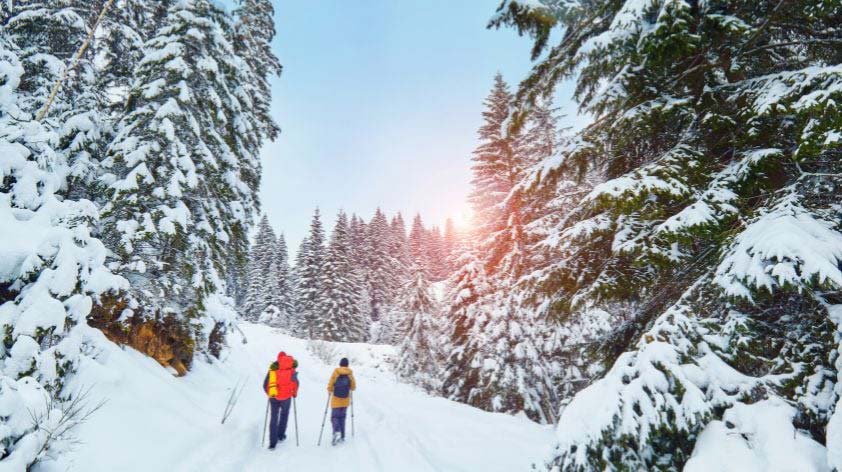
Don’t put away your hiking boots just yet. Colder, crisper days offer a unique opportunity to explore the outdoors, with quiet trails and beautiful frosty landscapes. Hiking in the winter can connect you with nature during a season when many of us spend too much time indoors. With the right preparation, you can turn a chilly day into an unforgettable adventure, building memories that last much longer than the winter chill.
Here are some tips for hiking in cold weather that can help you stay active this winter.
Embrace the Winter Wonderland
Winter changes familiar trails into magical new worlds, turning forests into sparkling wonderlands and hills into serene escapes. To prepare for the conditions, start by choosing a trail you know well or one that has many markings. This is especially important if you’re planning on visiting a national forest where conditions can quickly change.
Always check the weather forecast before you leave. Daylight hours are shorter in winter, so plan your hike with plenty of time to finish before sunset. Remember to let someone know your route and your expected return time for added safety. If you’re hiking in a group, agree on a meeting point in advance, and carry a map or GPS device to stay on track.
Dress for Success
Your comfort and safety depend heavily on what you wear, and staying warm and dry is the most important factor. Layering allows you to adjust your clothing as your body temperature changes. The first layer is a moisture-wicking base layer to pull sweat away from your skin. Then wear a fleece or wool middle layer for insulation, and top off your layers with a waterproof and windproof outer coat. Remember, cotton holds on to moisture, so choose synthetic or wool fabrics instead.
Wear insulated, waterproof hiking boots with good grip to keep your feet warm, dry, and stable on slick surfaces. Pair them with warm, wool-blend socks to prevent blisters and retain heat. Additionally, a warm hat, gloves, and a scarf or neck gaiter are necessary, as you lose a significant amount of body heat through your head and extremities.
Pack Smart for the Cold
Your packing list for a winter hike will be slightly different from your summer one. Alongside the essentials, there are a few extra items you need. In fact, there are certain things hikers can’t forget in the winter, such as a headlamp, an emergency blanket, and extra food to keep you fueled if you’re out longer than planned. Store your phone or GPS in an inner pocket near your body heat to protect battery life from the cold, and pack a small first-aid kit.
Other gear to bring on your next hiking trip includes a thermos filled with a hot drink, like tea or soup, which is a wonderful morale booster. High-energy snacks are a must, as your body burns more calories to stay warm. Toss in a lightweight sit pad or blanket for rest breaks, and don’t forget a camera as winter offers amazing photo ops! With these tips for hiking in cold weather, you can stay active and healthy this winter, making every excursion safe and memorable.