Fitness isn’t one-size-fits-all. It’s a personal journey tailored to your unique body, goals, and circumstances. Fitness for people with disabilities requires adaptability and accessibility, yet standard gym advice often overlooks these needs, which can limit your workouts.
Whether you’re looking to adapt a current routine or start fresh, the key is customization and learning how to boost your fitness routine as a person with a disability. You need a plan that respects your body’s limits while challenging its potential.
1. Prioritize Function Over Aesthetics
It’s easy to get caught up in how an exercise looks, but what matters is what it does. Focus on functional fitness—exercises that improve your daily life. This means targeting movements that help with transfers, stability, grip strength, or posture.
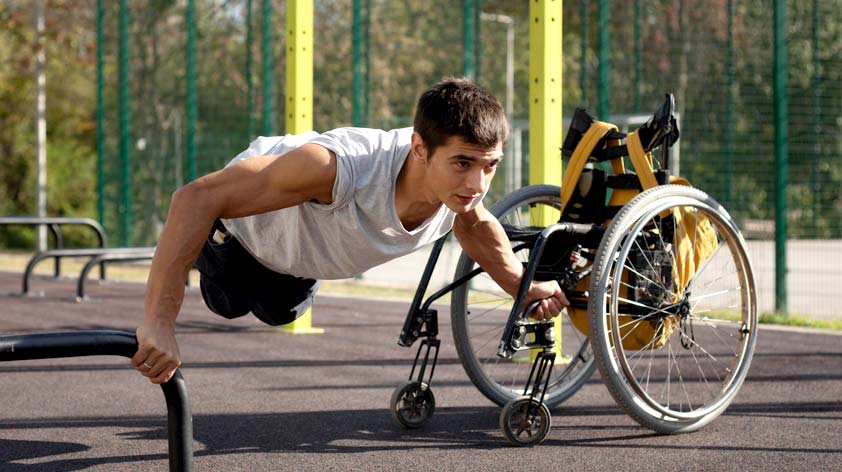
If you use a wheelchair, core stability and shoulder health are non-negotiable. Strengthening these areas can prevent injury and make daily navigation easier. If you have limited mobility in your legs, focus on upper body push-and-pull movements like:
- Seated overhead presses for shoulder strength.
- Resistance band rows to improve posture and back strength.
- Chest presses to build pushing power.
There are also a variety of wheelchair-friendly outdoor activities that can help you continue developing your fitness routine while adding variety to your daily life.
2. Leverage Adaptive Equipment
Lots of workout equipment can feel out of reach for individuals with disabilities. Before you start feeling defeated, take a look at the equipment you have. Making your gym accessible is step one toward maintaining your fitness routine.
You don’t always need expensive machines to get a great workout. Simple, adaptive tools can transform a standard exercise into an accessible one.
Resistance bands are versatile and low-impact. You can attach them to a doorknob or a wheelchair frame to perform rows, presses, and curls from a seated or lying position. For heavy lifting, gripping gloves or hooks can help you secure weights safely, allowing you to focus on the muscle group you are training rather than your hands.
3. Master the Art of Modifications
Every exercise has a variation. If a movement causes pain or feels unsafe, modify it immediately. The goal is stimulation, not strain.
- Can’t do a standard push-up? Try wall push-ups or knee push-ups.
- Squats not an option? Perform sit-to-stands from a sturdy chair to build leg strength and independence.
Remember, a modified exercise isn’t a “lesser” exercise. It is a smart adaptation that keeps you in the game.
4. Listen to Your Energy Levels
For many with chronic conditions or disabilities, energy levels can fluctuate wildly. The “push through the pain” mentality can be dangerous, so it is important to prepare for unexpected setbacks in fitness and beyond. Instead of pushing yourself too far, practice energy-conservation techniques during your workout.
Take longer breaks between sets if needed. Your muscles need oxygen to recover. Another option is splitting up your routine. If a 60-minute session is too draining, split it into two 15-minute or 20-minute sessions throughout the day.
Your Fitness, Your Rules
Building a fitness routine with a disability requires creativity and patience, but the payoff is immense. Don’t try to force yourself to your limits. Start small. Commit to consistency. And remember, fitness for people with disabilities is about doing workouts you can perform safely, confidently, and enjoy long term.